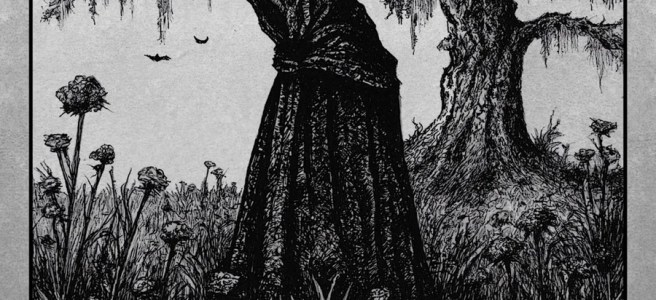
I read this book because of BackWoodsBooks’ interview with Caisse. The praise, story description, and cover really sold me on this book. I bought it.
This cool book, worth reading. It’s clear up front who the main character is and where he is set in the world.
This man, Kawahashi, rose from the ashes, became part of a family and then was introduced to realistic choices that would affect his path. I love a story where honor is central, and this book’s setting, culture, and character choices are loaded with honor.
The setting, what I assume is ancient Japan, is new to me. I’ve not read anything like it, but the characters, their backgrounds, motivations and Kawahashi’s path are well laid out and drew me in. The pacing is solid and I breezed through the book, having a hard time not reading all night on a couple of occassions.
One of the items that got me in the beginning was the Japanese spirit world. I was completely unfamiliar with this, but I found it interesting and endearing. It started with shikigami and progressing through Kawahashi’s quests to achieve honor and satisfaction. The Shattered Way, Kawahashi’s path is interesting and detailed and the onryō were new and fascinating.
The subtext of the story reminds me of Caisse’s ‘Witchfinder’s Daughter’ in that the author is deftly making commentary on human nature and the cost of choices. I like this kind of writing because it’s not just entertaining, it also feels like a part of the whole, a part of humankind.
The Shattered Way is definitely unique, entertaining, and worth reading.
I love a good sci-fi story and this is one of them. This is Oyebanji’s debut novel, and it’s pretty great, well worth reading.
The story occurs in a somewhat common setting for science fiction: space. A trio of interstellar colony ships with thousands of humans are a hundred and thirty years into their trip. They’re nearing Braking Day, the point when the ship has to turn around and fire its engines to slow down. This is when really bizarre events begin to occur, and the fate of the whole colony is put in jeopardy.
The colony’s culture semi-class-based is believable along with the neat way tech is used and the way water is the basic currency. Certainly more than plausible considering a small group of people trapped in ships together for a hundred years. From a writing perspective, the technical and sci-fi nature of the book was super easy to understand and made sense. Yes, I love sci-fi, but I think a non-sci-fi reader would easily pick up the nuance.
The characters are uncool underdogs, but they step up and become reluctant heroes in a way. Ravi McLeod is training to be an engineer, but he’s part of the lower class and his family has a reputation. His cousin, Boz, is a renegade, causing herself a ton of trouble.
The introduction of future artificial intelligence characters is very well done. They are simultaneously believable and terrifying.
The way everything comes together with the characters and the fate of the colony is satisfying, and overall, this is a good story. I would definitely read another of Oyebanji’s books.
A few years ago my wife and I included the Wingfeather Saga books in our nightly bedtime reading ritual. They are great books, full of imagination and hope. Written for kids, they hold enough magic and depth that they are also suitable for adults.
I picked up The Graphic Novel version of book one. It was released in 2026, and is the same book as the original, except… well, it’s graphic. The story isn’t word for word, it has been reformatted, refit, tweaked to fit the graphic style. That being said, the story is intact and has the same feel and vibe.
On top of the story (or behind it) are the images. The art in this book is so very well done, and I imagine Alessia Trunfio will be even more famous. I have never heard of her, but she deserves serious kudos. The colors pallet is bright and contrasty, and the characters connect with both the original books and the animated show.
Overall, the effort to remake this fits well into Peterson’s love of art and storytelling. It’s a worthy addition and worth reading.
This is book 3 of “The Unforgettable Adventures of Adeline Bigsby”
Adeline Bigsby lives between worlds, and in book two, The Unwanted Alliance, she clashed with Caleb, an escapee from Ralock’s dark realm.
Caleb’s Story is a continuation of Addie’s story, and I think it gives an important backstory to someone that is similar to Adeline but has encountered the worlds we know in a different way. He has certainly made some different choices and experienced greater pain.
Caleb’s story tells how he came to live in Ralock’s realm and it shows just how terrible it is to live in fear and captivity.
These books are written for youth, so they are a very approachable read. I had my fourteen year old son read it first since we have kept up with these books together. He enjoyed it.
Without giving too much away, the tension between the two worlds is interesting and thought provoking. The story’s use of the two and the contrast between foundational characters within the alternate reality are highly effective. Ralock is very evil and twisted. His every desire is to enslave and harm, while Jesse, Godfrey, and Henry are purely good and wish nothing but the best for the protagonists.
Ultimately, the story has dark moments and shows Caleb’s despair, but ends in hope and love. I’m definitely picking up the rest of the books as they come out.
Despite the author’s last name being hard to spell (I had to double-triple check), he clearly spent a lot of brain-power on this clever remaking of the Christian classic “The Pilgrim’s Progress” which was written by John Bunyan and published in 1678 and 1684 (part 2). Some might say, did the original need to be re-written? I would answer, the word “need” is maybe too strong, but the original language is very difficult to read. For the sake of making the message accessible to modern readers, a re-write or update can make a lot of sense.
Umstattd gave us more in his re-write, and because his style is unique, this may anger some people, but I believe it is a matter of preferences. The Pilgrim’s Progress Reloaded is a satirical science-fiction version of the same story. Umstattd started with a podcast retelling which morphed into a free audiobook on his site. The audio version is quite entertaining and well-done.
On Umstattd’s site, I found his story blurb to be perfect. It will either make a person curious or it will drive people away, but the concise humor and phrasing makes it very clear how a reader should approach the book.
“Pilgrim’s Progress is a classic allegory. It’s also a story with no robots, space marines, or talking platypuses. So we fixed that. You’re welcome.” (from https://www.davidumstattd.com/)
I listened to a bit of the audiobook before buying the book in print. It’s really well-done.
From the style perspective, I enjoy science-fiction, so the idea of “Christian” wearing power armor as a stand-in for Bunyan’s original pack of sin is cool. He deals with a lot of the obstacles by blowing them up with explosive ammunition and talks in a funny, over-the-top hero voice. It’s a bit like Duke Nukem. There is a lot of blood and violent reactions to things. If you’re into FPS gaming, the fights have a lot of the same action and imagery you’d expect in Doom. The spiritual warfare metaphors don’t change: ease makes you sloppy, persecution hits like a raid boss, and looking good in the mech isn’t what gets you through. What matters is staying on the path once you’re actually wearing the armor.
For instance, while being questioned by Law, Christian admits to his breaking of the law (murder, kicking widows in the shins, etc). Christian is asking for mercy because he confessed. Law shoots Christian in the chest and makes the statement that a confession cannot “unspill blood” or “unbreak the law.” Punishment deserved is carried out.
As in the original story, Christian evolves, he grows and is equipped. He traverses the path to the sci-fi military church (Palace Beautiful) for equipping, he learns to pilot a Holy Ghost mech, Evangelists try to recruit him into their military bases, etc. All of the original characters are there along with their intentions.
Having read the Pilgrim’s Progress, I found the deeper meaning still 100% intact. In particular, the way Christian gets lulled in the enchanted ground really speaks to how a believer can become complacent and what effect that has.
Some fun moments:
Christian has trouble trying to drive a standard-transmission Holy Ghost mech.
The palace brawl with Zealot in chapter 10.
Truth’s kung-fu in chapter 14
The big battle in chapter 15 where Christian battles the “Persecuitrons.” This is an epic, very long fight with tons of attrition and over-the-top weapons.
There is a lot of clever stuff this book, and it’s mixed in with the original allegorical points which are still provoking and causing self-reflection. The mix is weird but cool.
This is a fantasy book from 1920. I read it because the blurb was pretty good and because it was old. It reminds me a bit of C.S. Lewis’ Space Trilogy (Out of the Silent Planet, Perelandra, That Hideous Strength). I call it fantasy because the book is set in a different place and the story is old enough and odd enough to in some ways defy the science fiction label. Maybe it is science fiction. The story arc is sometimes described as metaphysical with characters that are points of view or principles similar to C.S Lewis’ Space Trilogy and Pilgrim’s Progress characters.
Interestingly, this book was also made into a movie (1979) (Youtube). It’s a 70’s movie, so be prepared for pretty terrible.
In A Voyage to Arcturus, Maskull (the protagonist) the book opens with a seance, and Maskull is convinced to visit a certain place on earth by a mysterious man. He travels to a planet called Tormance which orbits a double-star called Arcturus.
The description of that travel is bizarre. The climbs steps in a house on Earth and experiences Tormantic gravity the further upward he travels. With help, he gets to the top and after ingesting something, he travels in to Tormance.
Maskull ends up alone there and he grows new sensory organs. His journey is troubling and nightmarish. The land and characters on Tormance are supposedly allegorical and represent philosophical and states of mind. It’s weird and hard too follow.
All existence is pain… Perhaps the philosophical nature is what makes it still a good read 105 years later. Still, at times I found this book to be a bit of a slog.
All told, there is a lot of depth in the story and writing. The reader just has to wade through the older language and writing style.
Overall, this book isn’t for everyone. If you’re into strange stuff and want to broaden your reading horizons, I recommend it.
I don’t think I’ve read a book like this before. The steampunk world in combination with a unique fantasy “magic” system makes for an interesting read. The idea of the spellsword (a magic sword with a specific personality and powers) is unique and the story explains just enough to leave a hint of mystery. The combination of the swordbearer and spellsword together works well to create a partnership that can achieve great things… at some cost.
The main characters are understandable with solid motivations and actions. I felt like Inga’s intro and the story that followed was great, and I could relate a little bit to Kale as well. I came away feeling like Kale’s future direction was unknown, which is not what I hoped for him. The antagonist is an absolutely vile person, and she came off as being a bit of a spoiled kid from a powerful and rich family who finally grew up and seriously applied herself to evil. Effective.
The writing is really well done, easy to read and follow. The characters are well-defined. Excellent editing. The story pacing is well-done, and I like the point of view switch to from 1st person for Inga to 3rd for others. It really works.
Overall, the world is broad and yet unique enough to see many more stories come out. There is a fleshed-out world in place, including a map and historical references that promise future depth. There are currently two other books out and there are even more spellswords that are listed in the index, which means plenty of reading ahead!
This book is not terribly old, but it feels old… and it’s a western, which has fallen out of style in recent years.
I do like older books because they tend to be less frantic and less desperate to meet the modern idea of what keeps readers engaged. The style is excellent and simple.
Last Warriors on the Llano is such an easy read. The writing is so direct that I, as a writer, thought to myself, “Graham, you’ve gotta learn this art!” In the end, the straightforward sincerity of the two main characters is what I loved most.
Cody Carson is a Texas Ranger whose well-earned vacation is interrupted by the murder of a local rancher. While on the ensuing mission to save lives, he meets an unlikely ally, an Indian named Red Wind. Red Wind takes Cody to the Llano Estacado – the Staked Plains – a vast expanse of desert where their friendship and honor are forged in fire.
I could feel the character exuding from these men who became fast friends. This was my first Howard Pelham book, but I plan to read more of his work.
Mostly, I read science fiction, some fantasy, non-fiction, but have never had a taste for horror or anything like it. I generally don’t watch horror movies either. I have never sought out or read a book in this genre or with this topic, so the whole experience is new for me. That being said, I enjoyed this book.
The story is about a family that has moved to the south from Massachusetts in the era of the Salem witch trials in the late 1600s. Something evil came with them, and the story that follows is quite creepy. The twist near the end was definitely unique, and the ending really surprised me. I don’t do spoilers, so you’ll have to read it to find out.
The writing style is dark and purposefully starts a bit angular. It sets the dark tone well. In particular the opening chapters are oppressive. I found myself thinking: “self, what is this poor family doing on this terrible road!?” It lightened up for a bit after that, but it was short lived.
The settings and descriptions are very well done and are easy to imagine. I enjoyed the character groups and how they overlap and interact. The family, the townsfolk, and the natives all have different perspectives and views on the same things. It’s easy to follow and actually makes sense.
The sense of heavy dread works, and the complexity of dealing with the curse and various ways that it touches the characters really makes the story not monochrome. Oddly, there at the end is a glimmer of hope, but not for who I wanted it to be.
Being a debut novel, it’s pretty well done, and worth reading, especially if you like disturbing stories.
I tend to look at books as being on a scale of meat to candy. Candy is pure entertainment, easy to read, and I usually fly right through these stories. Meat might be difficult but has more substance, usually these are non-fiction. Ham is literally meat-candy, so it holds the center. While fiction is usually candy, Travel by Star has enough depth to push it toward the center. It is intelligent and thought-provoking while still being a fun read.
I picked up this indie fantasy book because I love to read independent author stories, the story seemed unique and interesting and I thought it might contain an underlying light in the darkness. I wasn’t let down. I don’t like spoilers, so this review will be intentionally vague.
First of all, this book is an epic fantasy through and through. The story covers a wide swath of well-built fictional world. It has a map, many characters, high-stakes outcomes, magic, and heroes. At over six-hundred pages, it reads like an epic and wraps up the main story pretty well.
It took a while for me to really get a sense of who the protagonist is, and I like that. Travel is a man that seems somewhat ordinary at first, though he comes from difficult times that have molded him into the hero that is needed. He reminds me of something my pastor says often: (paraphrasing) “God made you for this time. Be strong and courageous.” As I got to know this somewhat rough man, I encountered his depth and character. What makes Travel likable (to me at least) is his honor. He is a man of his word, someone reliable and strong. He is someone who will do the hard thing because it is the right thing. That’s the core of a hero.
The second protagonist is Nichole. At first she was interesting to me because she has issues. Not long into the book, I found that is special and designed for her unique task. It works, and her story unfolded over the course of time into a full purpose that I’m uncertain of in the end. I could not relate to her in any meaningful way.
With 600+ pages, there were a couple of times where I lost focus. The book contains a few side-stories, flashbacks, that support the world that is being built. Though added context can be useful, some of these might not be necessary, but they weren’t anything drastic, just a little side-track here and there.
What I loved about the story is the underlying theme: mankind’s fallen nature and need for redemption combined with available grace that is not scoffed at by the writer. There are layers of themes and meaning that are well applied and those who recognize them will appreciate them. The main theme always resonates with me, and is one of the main reason’s why I recommend this book. The story is clean, and I know that I could give it to a young teen to read. In this way it reminds me of Tolkien’s Lord of the Rings. Being full of action and adventure yet lifting the reader’s heart to perpetual hope.
The writing style is very descriptive without being too verbose. The prose is easy to read and follow, nothing awkward or weird. It’s not written down to youth, but is accessible to anyone who is commonly reads fantasy. For a debut novel, it’s quite good.
I also enjoyed the world-building. Travel by Star is a new world with depth, variety, and an enjoyable western feel. It’s gritty and dangerous, and as a result, the people in it are hardened and tired yet they persist. Very relatable.
I come away thinking about West and the Shrian kingdom which reminded me a bit of George R. R. Martin’s Song of Ice and Fire. I think the kingdom’s backstory would be pretty awesome.
Paul Grill says that he is writing a companion or a sequel, and I look forward to reading that when it comes out.